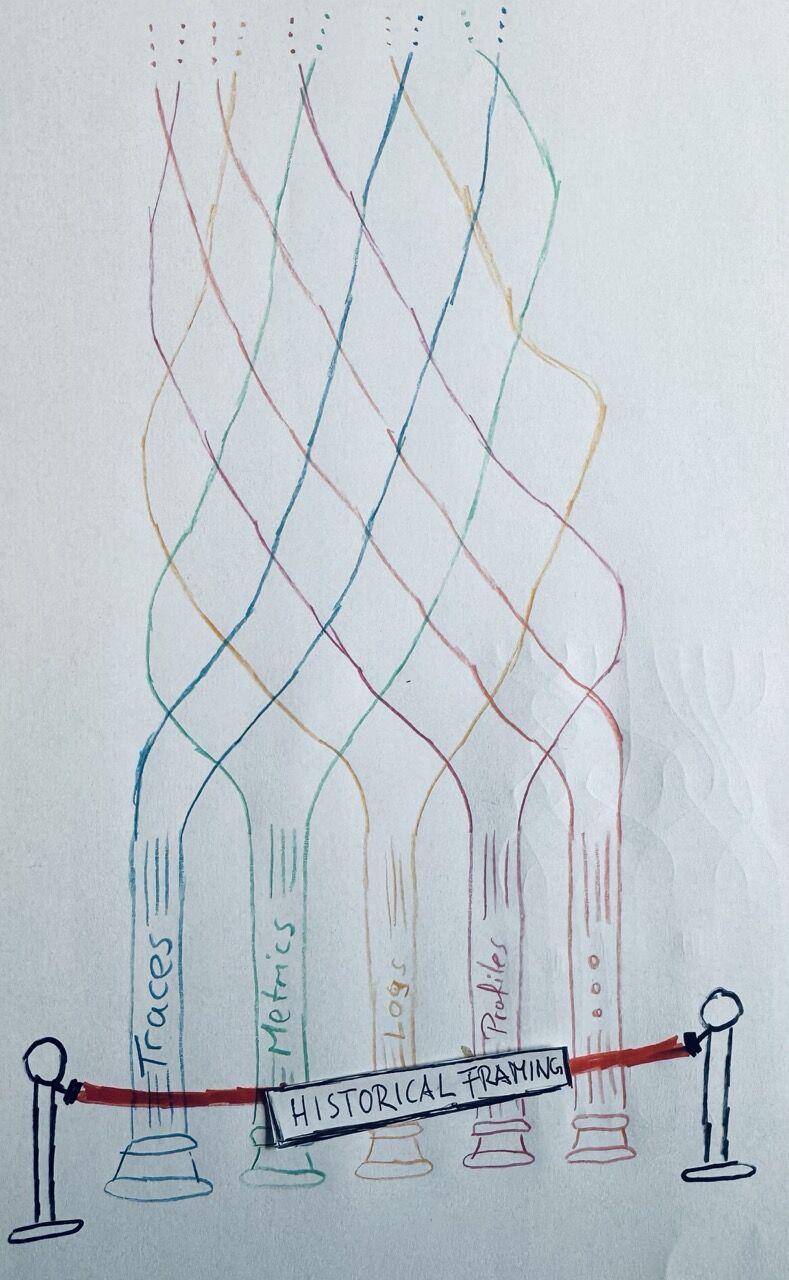
I just read another post introducing traces, metrics, and logs using that analogy, which reminded me to re-share that excellent piece by Ted Young on The New Stack from a few years ago:
Modern Observability Is a Single Braid of Data
Ted argued the pillars are no longer load‑bearing and suggests a better framing: the “Single Braid of Data”.
So let’s wheel the pillars into the museum, rope off the exhibit, and hang a small plaque: “Historic framing.” As we do with once‑cherished pillars that are no longer load‑bearing.
If you wonder why they belong in the museum, let me give you a quick summary: they leave out an essential piece. Observability isn’t about filling three (or four, or five, …) categories of telemetry. It’s about how signals weave together into a coherent braid, where context flows, and cause and effect can be understood. This is why the braid framing is so much stronger.
As we rope off that exhibit, I’d love to hear your story: when did the “three pillars” framing lead you astray, and what replaced it for you: braid, flow, or another framing that helped you find cause and regain control?
Note
This post was published on linkedin via this post